

Mood disorders are treatable — even when they’ve lasted years.
Persistent depression, debilitating lows, or swings between extremes aren’t a matter of willpower. They’re medical conditions — and at Wave, they’re what we specialize in.

What is Mood Disorders?
Mood disorders are a group of conditions in which a disturbance in your emotional state — most often depression, and sometimes elevated or unstable mood — becomes persistent enough to interfere with daily life. They are among the most common and most treatable conditions in psychiatry.
Wave treats the full spectrum of mood disorders, from major depressive disorder to bipolar disorder, with particular focus on cases that haven’t responded to standard treatment.
Mood disorders look different from person to person, but common signs include:
Emotional
- Persistent sadness, emptiness or hopelessness
- Loss of interest in things you used to enjoy
- Irritability, or periods of unusually elevated mood
Behavioral
- Withdrawing from people and activities
- Changes in sleep — too much or too little
- Difficulty concentrating, deciding or getting started
Physical
- Fatigue or loss of energy
- Appetite or weight changes
- Feeling slowed down, restless, or run down
In crisis? If you’re having thoughts of suicide or self-harm, help is available right now. Call or text 988 to reach the Suicide & Crisis Lifeline, any time, day or night.
Explore mood disorders



How it’s diagnosed at Wave
Diagnosis begins with a thorough psychiatric evaluation. Dr. Beatty and the clinical team review your history, your current symptoms and how long they’ve lasted — distinguishing, for example, major depression from the highs and lows of bipolar disorder, because the two are treated differently.
Where it adds clarity, we may use validated screening tools and pharmacogenetic (genetic) testing to guide medication choices. The goal is an accurate diagnosis the first time, so treatment is targeted rather than trial-and-error.
Wave treats mood disorders across the full range of care — from first-line medication to advanced interventional options for cases that haven’t responded:
Every plan is individualized — you’ll feel seen, not processed.
Medication Management
Careful prescribing, ongoing monitoring and genetic testing to match you with the right medication at the right dose.
TMS Therapy
Non-invasive magnetic stimulation — FDA-approved for depression and OCD — with no medication and no downtime.
Ketamine & Spravato
FDA-approved Spravato (esketamine) and ketamine for treatment-resistant depression, under close medical monitoring.
Interventional Psychiatry
Advanced, procedure-based care — TMS, Spravato and ketamine — for symptoms that medication alone hasn’t resolved.
Supportive Psychotherapy
Talk-based support integrated with your medical care, focused on coping skills and steady, measurable progress.
Care led by a triple board-certified physician
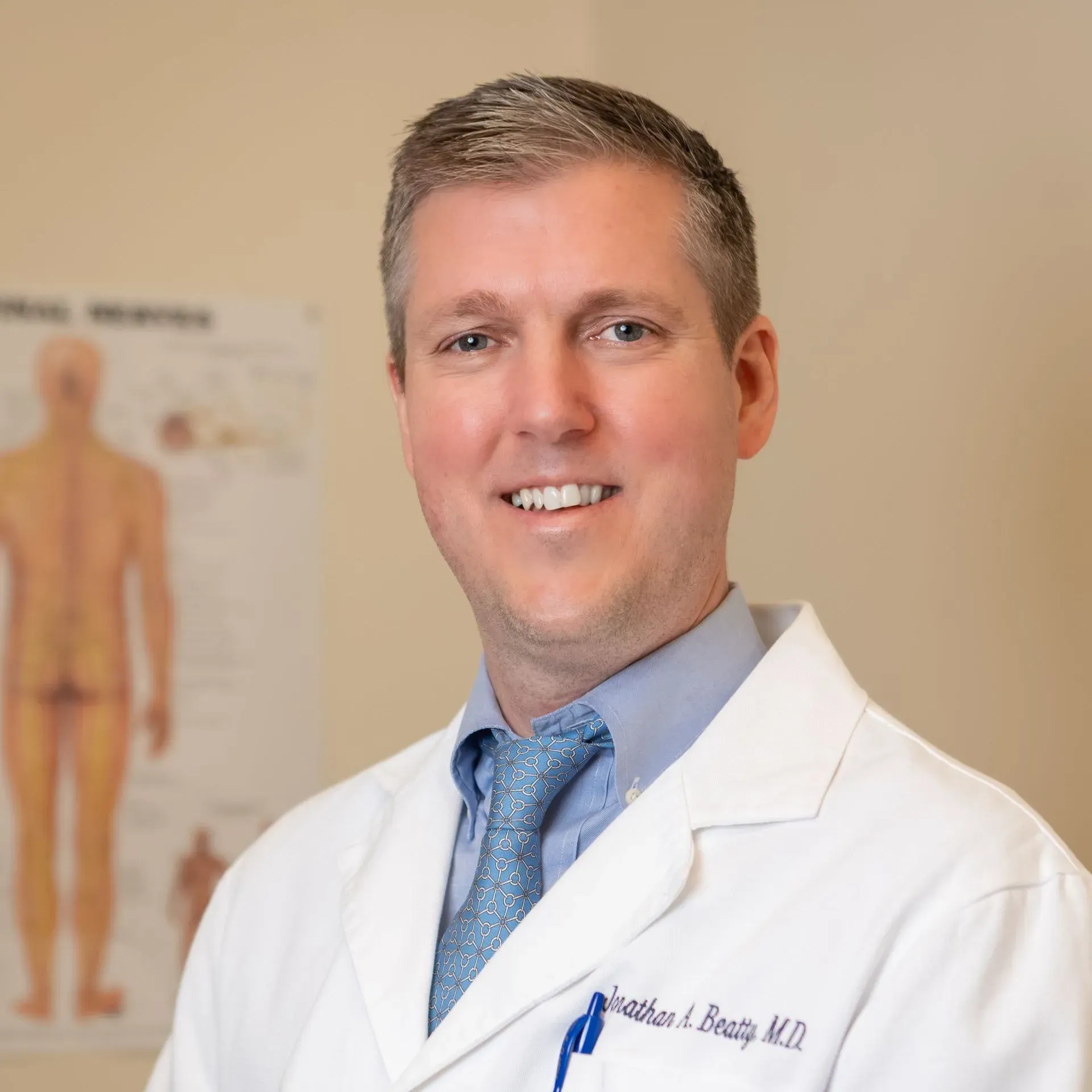
Wave Treatment Centers is led by Dr. Jonathan Beatty, a triple board-certified physician in psychiatry & neurology, addiction medicine and pain medicine, and a Fellow of the American Psychiatric Association. With more than 18 years of experience, he treats the cases other practices send onward — including complex and treatment-resistant presentations.
Because Wave combines everyday psychiatric care with advanced, interventional options under one roof, your plan can evolve as you do — from medication management to TMS, Spravato or ketamine — without starting over with a new provider.
Meet Dr. BeattyYour first appointment
Your first visit is a thorough evaluation. You’ll find a welcoming environment where our highly trained staff work to understand your history, your symptoms, and what you’re hoping to change.
While an evaluation is not a guarantee of a prescription, if medication is deemed appropriate, we’ll work closely with you to ensure you understand the risks and benefits. Together we’ll outline a personalized plan and the next steps that fit your life.
Most new patients are seen within one to two weeks — and care is available both in person and through secure, HIPAA-compliant telemedicine across Pennsylvania, Florida and New Jersey.
Mood Disorders FAQ
Are mood disorders curable?
Most mood disorders are highly manageable rather than “curable” the way an infection is. With the right treatment, many people reach full remission — few or no symptoms — and stay well with ongoing care. The goal at Wave is lasting remission and a return to the life you want.
Will I have to take medication forever?
Not necessarily. Some people need medication only for a period of time; others do best with longer-term treatment, and some respond well to non-medication options like TMS. We tailor the plan to you and revisit it regularly.
What if antidepressants haven’t worked for me before?
You’re who we’re built for. When standard medications haven’t helped, interventional treatments like TMS and Spravato (esketamine) work through a different mechanism — and PPO plans often reimburse much of their cost as an out-of-network benefit.
How soon will I feel better?
It depends on the treatment. Medications often take a few weeks; some people notice changes with Spravato or ketamine within days. We track your progress closely and adjust rather than waiting indefinitely.
Ready when you are.
Reaching out takes courage. Your conversation with us is confidential, compassionate, and pressure-free — schedule whenever you’re ready.