

When depression hasn’t responded there’s still a path forward.
If you’ve tried antidepressants and still don’t feel like yourself, you’re not out of options. Treatment-resistant depression is exactly what Wave specializes in.

What is Treatment-Resistant Depression?
Treatment-resistant depression (TRD) is major depression that hasn’t improved after two or more adequate trials of antidepressant medication. It’s common — and it does not mean your depression is untreatable. It means the standard approach wasn’t the right one for you.
Wave was built for these cases. Our interventional treatments work through different mechanisms than traditional antidepressants, reaching depression that pills alone haven’t touched.
TRD often feels like depression that won’t lift despite your best efforts. You may recognize:
Emotional
- Depression that persists after one or more medication trials
- Discouragement after “nothing works”
- Ongoing loss of interest, hope or motivation
Behavioral
- Cycling through medications with little lasting relief
- Side effects that outweigh the benefits
- Growing difficulty functioning at work or home
Physical
- Continued fatigue, sleep and appetite disruption
- Feeling “flat” or numb even while on medication
In crisis? If you’re having thoughts of suicide or self-harm, help is available right now. Call or text 988 to reach the Suicide & Crisis Lifeline, any time, day or night.
How it’s diagnosed at Wave
Diagnosing TRD means looking closely at your treatment history — which medications you’ve tried, at what doses, and for how long — to confirm each was an adequate trial. We also re-examine the original diagnosis, since conditions like bipolar disorder can masquerade as hard-to-treat depression.
Pharmacogenetic testing can reveal how your body metabolizes different medications, helping explain past failures and point toward what’s more likely to work.
This is the heart of what Wave does. For depression that hasn’t responded, we offer:
Every plan is individualized — you’ll feel seen, not processed.
TMS Therapy
Non-invasive magnetic stimulation — FDA-approved for depression and OCD — with no medication and no downtime.
Ketamine & Spravato
FDA-approved Spravato (esketamine) and ketamine for treatment-resistant depression, under close medical monitoring.
Interventional Psychiatry
Advanced, procedure-based care — TMS, Spravato and ketamine — for symptoms that medication alone hasn’t resolved.
Medication Management
Careful prescribing, ongoing monitoring and genetic testing to match you with the right medication at the right dose.
Supportive Psychotherapy
Talk-based support integrated with your medical care, focused on coping skills and steady, measurable progress.
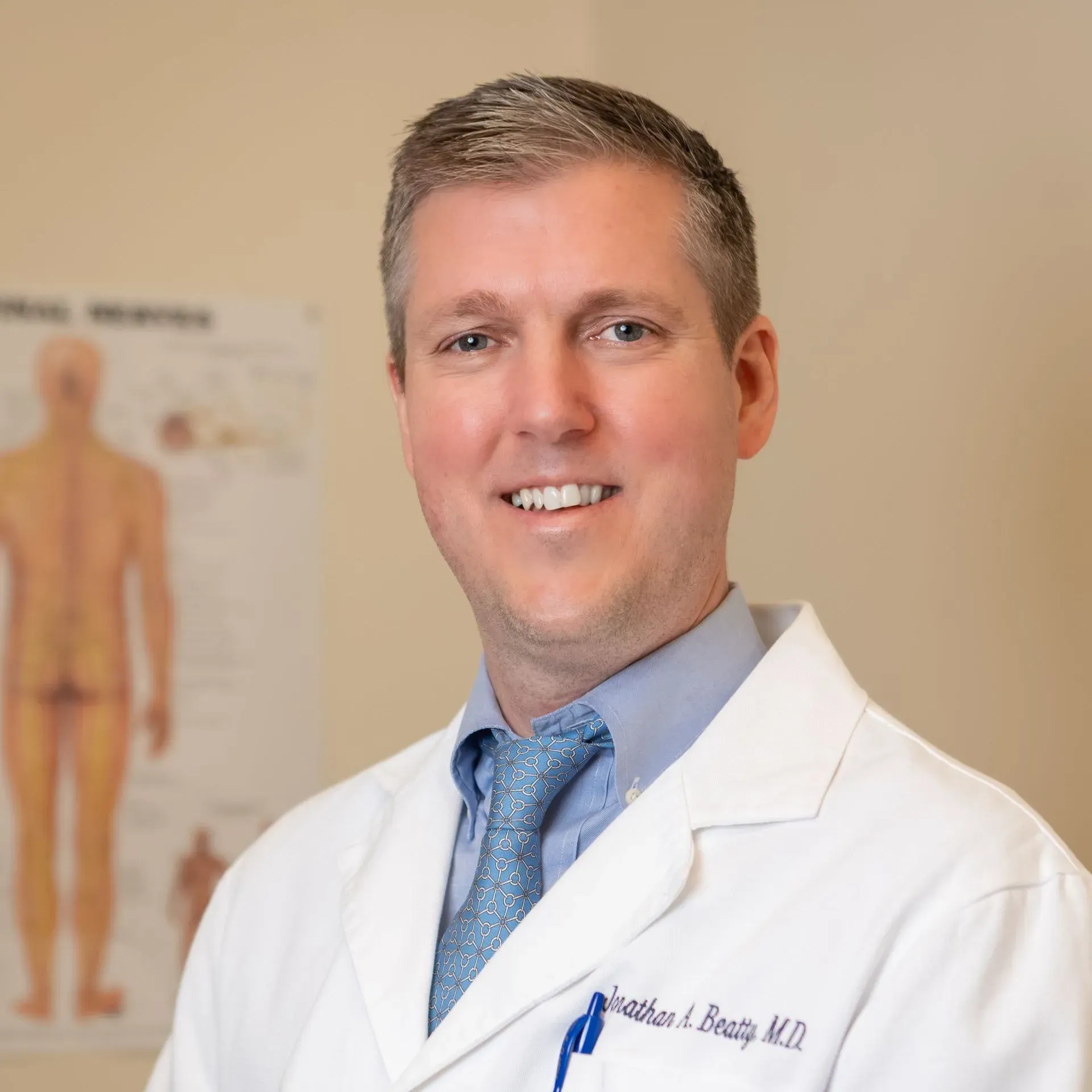
Care led by a triple board-certified physician
Wave Treatment Centers is led by Dr. Jonathan Beatty, a triple board-certified physician in psychiatry & neurology, addiction medicine and pain medicine, and a Fellow of the American Psychiatric Association. With more than 18 years of experience, he treats the cases other practices send onward — including complex and treatment-resistant presentations.
Because Wave combines everyday psychiatric care with advanced, interventional options under one roof, your plan can evolve as you do — from medication management to TMS, Spravato or ketamine — without starting over with a new provider.
Meet Dr. BeattyYour first appointment
Your first visit is a thorough evaluation. You’ll find a welcoming environment where our highly trained staff work to understand your history, your symptoms, and what you’re hoping to change.
While an evaluation is not a guarantee of a prescription, if medication is deemed appropriate, we’ll work closely with you to ensure you understand the risks and benefits. Together we’ll outline a personalized plan and the next steps that fit your life.
Most new patients are seen within one to two weeks — and care is available both in person and through secure, HIPAA-compliant telemedicine across Pennsylvania, Florida and New Jersey.
Treatment-Resistant Depression FAQ
What is treatment-resistant depression?
Treatment-resistant depression (TRD) generally refers to depression that has not improved adequately despite one or more appropriate antidepressant treatments.
TRD is common and does not mean that recovery is impossible. Many patients benefit from a more comprehensive evaluation and advanced treatment approaches beyond traditional medication management.
Does treatment-resistant depression ever get better?
Yes. Treatment-resistant depression means that previous treatments have not provided sufficient relief—it does not predict your future outcome.
Many patients who have not responded to antidepressants experience significant improvement with advanced treatment options such as TMS Therapy, Spravato® (esketamine), ketamine-based treatments, medication optimization, or a combination of approaches.
How do I know if I have treatment-resistant depression?
You may have treatment-resistant depression if you have experienced:
- Persistent depression despite medication treatment
- Multiple antidepressant trials without meaningful improvement
- Improvement that was only partial or short-lived
- Difficulty tolerating medication side effects
- Ongoing symptoms that continue to affect daily functioning
A comprehensive psychiatric evaluation can help determine whether advanced treatment options may be appropriate.
What happens if antidepressants don’t work?
If one or more antidepressants have not provided sufficient benefit, additional evidence-based treatment options are available.
Depending on your history and symptoms, treatment may include medication optimization, advanced psychopharmacology, TMS Therapy, Spravato®, ketamine-based treatments, psychotherapy, or a combination of approaches.
When should I consider TMS or Spravato®?
TMS or Spravato® may be appropriate when depression has not responded adequately to medication, when medication side effects limit treatment, or when symptoms continue to significantly impact quality of life.
A psychiatric evaluation can help determine which treatment options may be most appropriate for your situation.
How is TMS different from medication?
Unlike medications, which work throughout the body, TMS targets specific areas of the brain involved in mood regulation.
Because it is a localized, non-systemic treatment, TMS does not typically cause the systemic side effects associated with oral medications. Treatment is performed in the office without sedation or downtime.
Does treatment-resistant depression mean I will never get better?
No. The term "treatment-resistant" refers to how depression has responded to previous treatments—not to the likelihood of future recovery.
Many patients who have struggled for years find meaningful improvement after receiving a more specialized evaluation and advanced treatment options.
Ready when you are.
Reaching out takes courage. Your conversation with us is confidential, compassionate, and pressure-free — schedule whenever you’re ready.