

PTSD is treatable — you can feel safe again.
When a traumatic experience keeps intruding on the present — through flashbacks, nightmares or constant alertness — it may be PTSD. With the right care, the past can loosen its grip.

What is Post-Traumatic Stress Disorder (PTSD)?
Post-traumatic stress disorder (PTSD) can develop after experiencing or witnessing a traumatic event — combat, assault, an accident, abuse or loss. The brain stays in survival mode, keeping you on guard long after the danger has passed.
PTSD is not weakness, and it’s not permanent. Wave offers physician-led treatment that calms the nervous system and helps you reclaim a sense of safety.
PTSD symptoms generally fall into four clusters:
Re-experiencing
- Flashbacks, nightmares or intrusive memories
- Intense distress at reminders
- Physical reactions to triggers
Avoidance
- Avoiding people, places or thoughts tied to the trauma
- Emotional numbing or detachment
- Gaps in memory of the event
Mood & Arousal
- Negative beliefs, guilt or shame
- Irritability, hypervigilance or being easily startled
- Trouble sleeping and concentrating
In crisis? If you’re having thoughts of suicide or self-harm, help is available right now. Call or text 988 to reach the Suicide & Crisis Lifeline, any time, day or night.
How it’s diagnosed at Wave
We evaluate your symptoms across the four PTSD clusters, how long they’ve lasted, and their impact on daily life — at a pace that feels safe. We also screen for depression, anxiety and substance use, which often accompany PTSD.
You’re always in control of how much you share. Understanding your symptoms is itself a step toward relief.
PTSD responds to treatment, including for long-standing cases. Wave offers:
Every plan is individualized — you’ll feel seen, not processed.
Medication Management
Careful prescribing, ongoing monitoring and genetic testing to match you with the right medication at the right dose.
Supportive Psychotherapy
Talk-based support integrated with your medical care, focused on coping skills and steady, measurable progress.
TMS Therapy
Non-invasive magnetic stimulation — FDA-approved for depression and OCD — with no medication and no downtime.
Ketamine & Spravato
FDA-approved Spravato (esketamine) and ketamine for treatment-resistant depression, under close medical monitoring.
Interventional Psychiatry
Advanced, procedure-based care — TMS, Spravato and ketamine — for symptoms that medication alone hasn’t resolved.
Care led by a triple board-certified physician
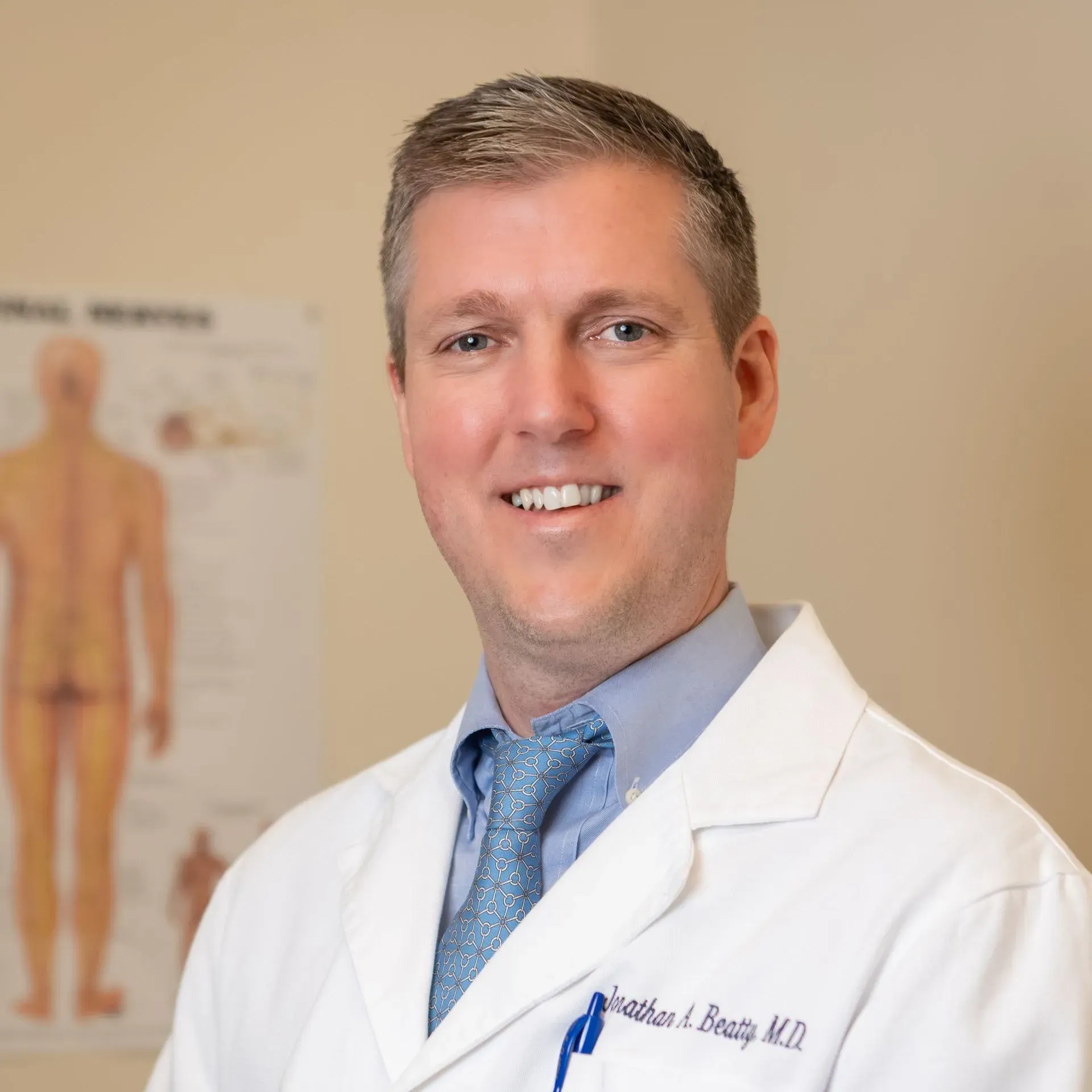
Wave Treatment Centers is led by Dr. Jonathan Beatty, a triple board-certified physician in psychiatry & neurology, addiction medicine and pain medicine, and a Fellow of the American Psychiatric Association. With more than 18 years of experience, he treats the cases other practices send onward — including complex and treatment-resistant presentations.
Because Wave combines everyday psychiatric care with advanced, interventional options under one roof, your plan can evolve as you do — from medication management to TMS, Spravato or ketamine — without starting over with a new provider.
Meet Dr. BeattyYour first appointment
Your first visit is a thorough evaluation. You’ll find a welcoming environment where our highly trained staff work to understand your history, your symptoms, and what you’re hoping to change.
While an evaluation is not a guarantee of a prescription, if medication is deemed appropriate, we’ll work closely with you to ensure you understand the risks and benefits. Together we’ll outline a personalized plan and the next steps that fit your life.
Most new patients are seen within one to two weeks — and care is available both in person and through secure, HIPAA-compliant telemedicine across Pennsylvania, Florida and New Jersey.
Post-Traumatic Stress Disorder (PTSD) FAQ
Can PTSD go away?
With treatment, many people experience significant relief and recovery, even years after the trauma. Symptoms can become manageable and, for many, fade substantially.
Do medications help PTSD?
Yes. Certain medications reduce core PTSD symptoms and improve sleep and mood. They’re often combined with therapy for the best results.
What if standard treatment hasn’t helped?
For PTSD that hasn’t responded, Wave can consider advanced, interventional options such as TMS and ketamine as part of a carefully monitored plan.
Ready when you are.
Reaching out takes courage. Your conversation with us is confidential, compassionate, and pressure-free — schedule whenever you’re ready.